Foundry

Govern the audience datasets and models your AI depends on.

Foundry turns asked, acquired, and observed audience data, plus scoring, population, and predictive models, into documented, validated, AI-ready intelligence foundations.

The point

Audience assets need governance before they become intelligence.

Audience knowledge rarely arrives as one clean source. It comes from surveys, panels, voter files, consumer data, CRM records, behavioral signals, and models created over time.

Foundry preserves those assets while making them legible: source type, population, methodology, field definitions, value meanings, model purpose, validation notes, lineage, caveats, and version status.

What Foundry governs

Audience datasets and audience models, prepared as reusable foundations.

Asked

Research and survey data.

Data collected by asking people directly.

  • Surveys and polling
  • Panels and questionnaires
  • Interview and study outputs

Acquired

External audience sources.

Data brought in from partners, vendors, or public and private files.

  • Voter files and consumer data
  • Third-party audience datasets
  • Partner and enriched records

Observed

Behavioral and customer signals.

Data created by what audiences do, buy, visit, open, or use.

  • CRM and customer records
  • Engagement and product activity
  • Transactions and interactions

Modeled

Audience model assets.

Reusable models that describe, score, segment, or estimate an audience.

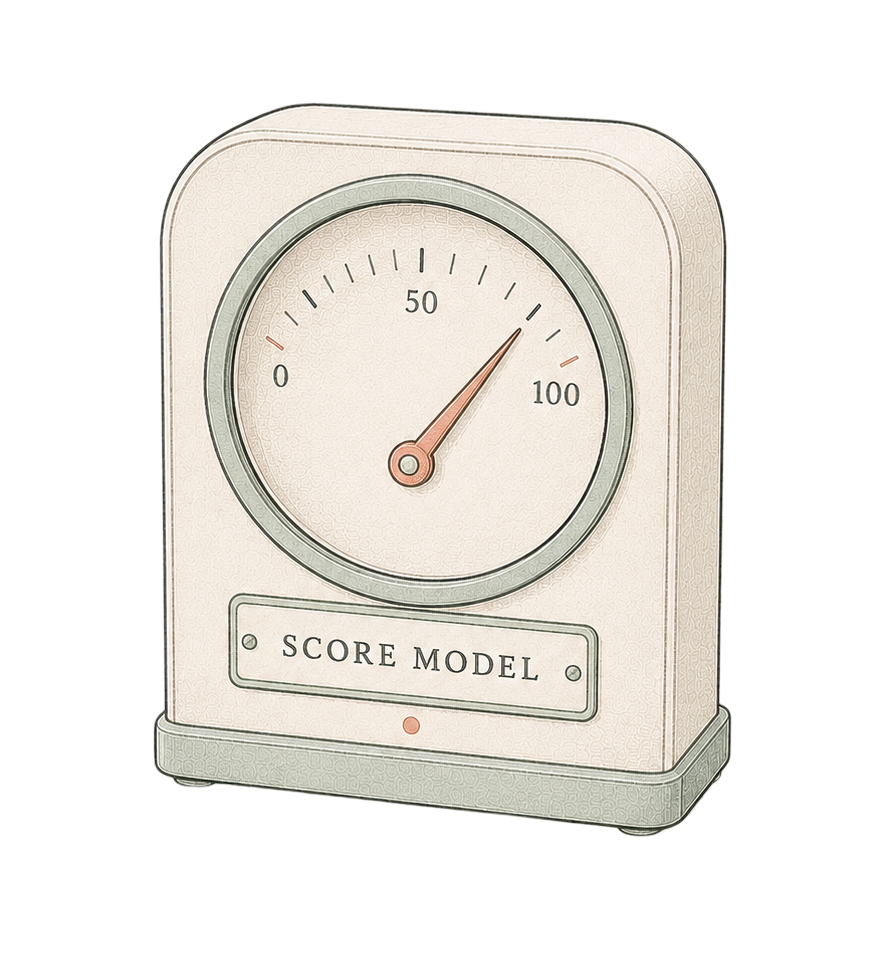
  • Scoring and propensity models
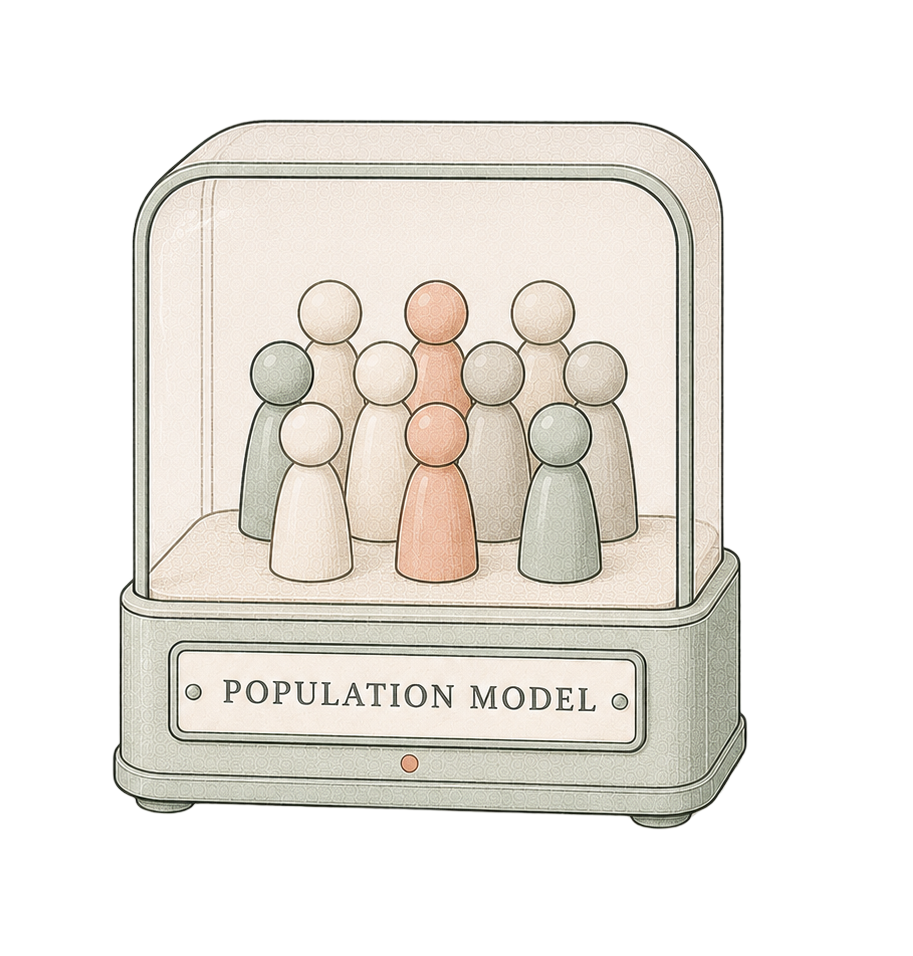
  • Population and weighting models
  • Segments, composites, and classifications

How it works

Turn fragmented audience assets into governed intelligence foundations.

Step 1

Ingest and classify.

Bring in datasets, model files, codebooks, questionnaires, weighting notes, methodology docs, and field guides. Wick classifies each asset as asked, acquired, observed, or modeled.

Step 2

Document context.

Dora drafts what it can read, asks for what is missing, and captures the universe, source method, variable meanings, coded values, model purpose, and interpretation rules.

Step 3

Validate and package.

Foundry profiles values, checks completeness, records caveats, versions the asset, and packages the result so people and AI systems can use it without reconstructing context.

Where it goes

Foundry assets become the trusted layer for analysis, workbooks, and AI systems.

Inside Wick

Compose in Workshop.

Use Foundry assets as the governed foundation for joins, cuts, tabulations, composites, scoring models, population definitions, and audience propensity analysis.

Outside Wick

Package and connect.

Turn governed audience datasets and models into Agent Dossiers, then make them available through the Connectivity Gateway to Claude, ChatGPT Enterprise, Copilot, Glean, and custom agents.

Make every audience dataset and model ready before analysis begins.

Request a Demo