
The data isn't ready
Definitions, calculation rules, missing-data handling, and context live in different places or only in people's heads. AI re-derives them on every pass, so facts drift, costs repeat, and nothing is governed.
For Enterprises
Wick prepares, governs, and connects your survey data and consumer, voter, and B2B files, so your teams and the AI systems working alongside them can reason from what the data actually says.
The Problem
First, the data is not ready: raw files force every system to re-query, re-compute, and re-interpret the same facts. Second, there is not enough of it: the joins, composites, variables, and models that AI could use were never worth building at this scale before.
Definitions, calculation rules, missing-data handling, and context live in different places or only in people's heads. AI re-derives them on every pass, so facts drift, costs repeat, and nothing is governed.
The useful intersections, composite variables, joined files, segments, and predictive scores do not exist yet. That missing data becomes the bottleneck between unlimited reasoning and a useful answer.
What Wick Is
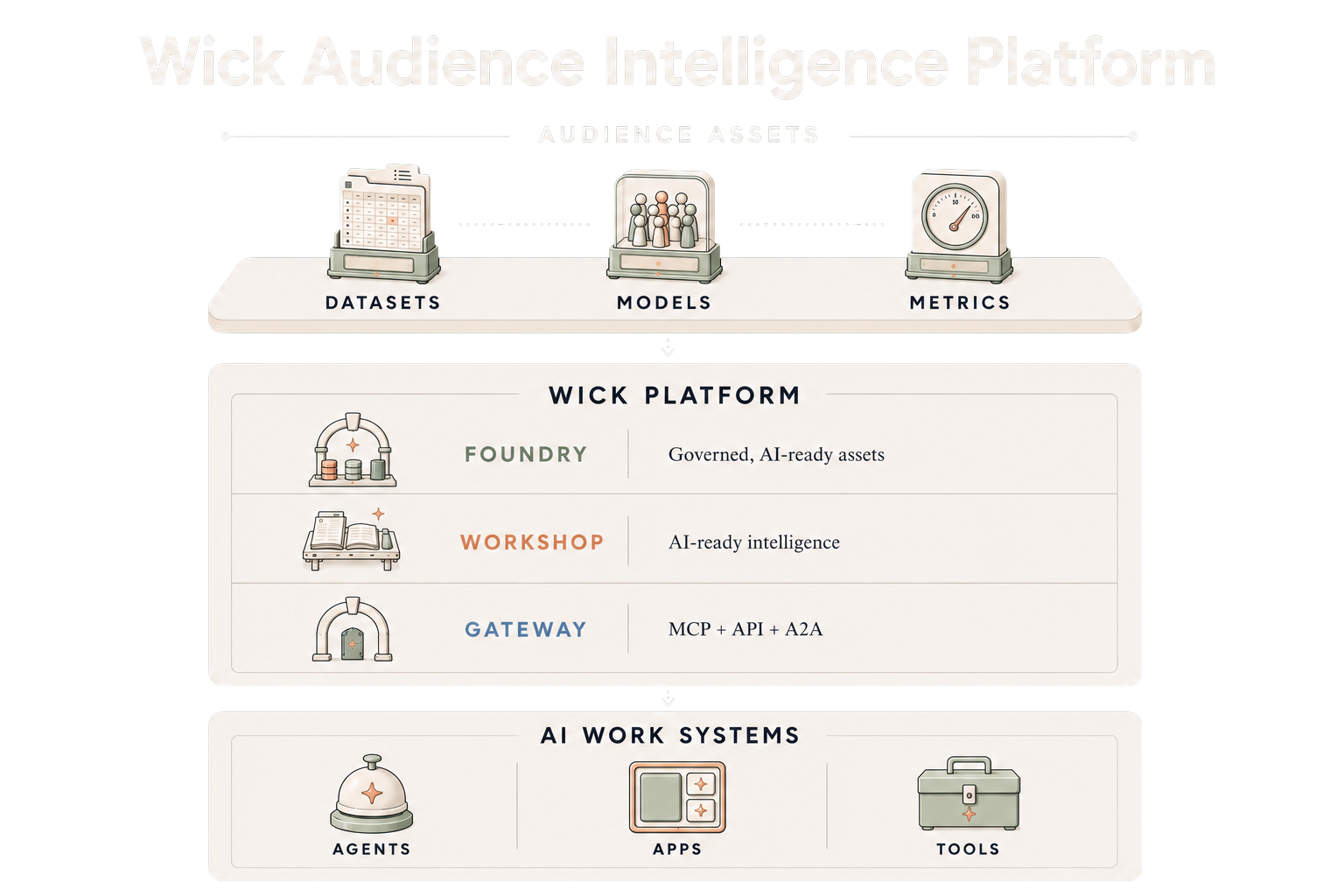
Wick turns survey data and consumer, voter, and B2B files into something people and AI can reason over reliably: computed once, audited, with context attached, and served through one gateway. It is built for structured, record-level data about people — not behavioral event streams.
Wick fixes the data, not the conclusions. Facts stay canonical while your people and AI remain free to reason from them.
Talk to our teamHow It Works
Your team sets the goal. Foundry classifies and governs the data you have. Workshop creates the joins, composites, variables, segments, and models you need next. Gateway connects that governed layer to the people and AI systems doing the work.
Step 01 · Govern
Classify and govern the data you already have. Prepare survey data, audience files, definitions, lineage, missing-data rules, and model records as one AI-ready foundation.
Matching data inherits the context and handling rules already bound to its type, so nothing starts cold.
Step 02 · Build
Create the data your AI is missing. Join files, compute composites, define segments, weight populations, and train models that score every eligible record.
Each new variable and model returns to the governed layer, expanding what every future question can answer.
Step 03 · Connect
Serve the layer through one governed door. Connect approved audience data and its context to assistants, agents, internal apps, APIs, and the workflows your teams already use.
People and AI can reason differently while starting from the same canonical facts and what the data actually says.